How to Signal SOS in Morse Code: A Complete Step-by-Step Guide
How to Signal SOS in Morse Code: A Complete Step-by-Step Guide
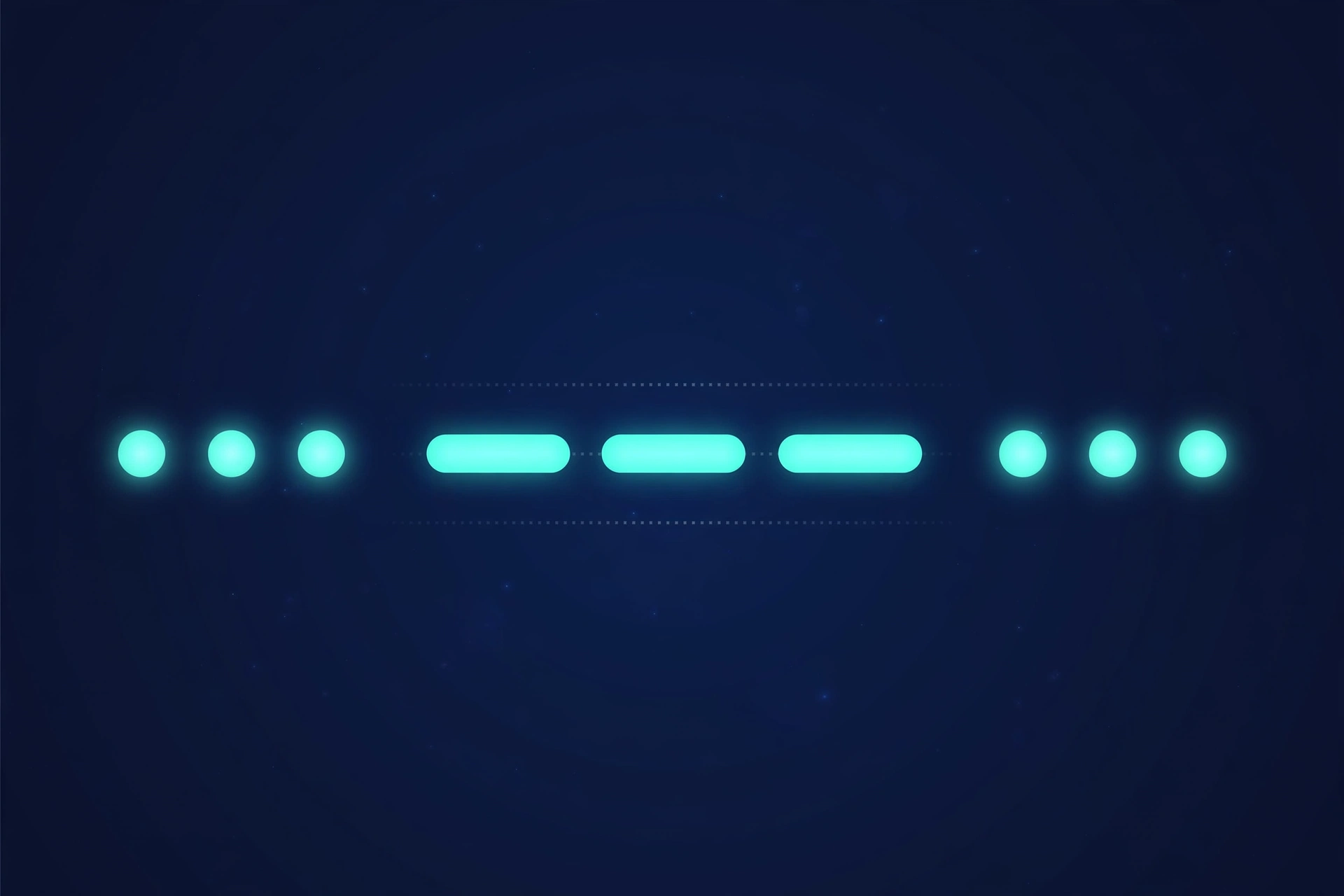
SOS in Morse code is the world’s most famous distress signal: three dots, three dashes, and three dots (. . . – – – . . .). It is short, unmistakable, and recognized across the globe as a call for urgent help. In this guide, you will learn the exact SOS pattern, the timing rules that make it readable, and how to signal SOS in Morse code with sound, light, and tapping.
What Is SOS in Morse Code?
SOS in Morse code is written as . . . – – – . . . — nine symbols in total. Taken as letters, it would be S (. . .), O (- – -), and S (. . .) again. But as a distress signal, SOS is technically a “prosign”: it is sent as one continuous pattern with no longer letter gaps between the S, O, and S parts. That continuous rhythm is what makes it instantly recognizable, even through heavy static or from far away.
The easiest way to remember it is: three short, three long, three short. Say it out loud as “di-di-di, dah-dah-dah, di-di-di” and you already have the core rhythm of the signal.
What Does SOS Stand For?
Here is one of the most common misconceptions in Morse code: SOS does not stand for anything. It is not an abbreviation for “Save Our Souls” or “Save Our Ship” — those phrases were invented later as memory aids because people naturally wanted the famous signal to mean something.
The real reason SOS was chosen is pure engineering: the pattern . . . – – – . . . is simple, symmetrical, and almost impossible to mistake for anything else. It works at any speed, through noise, and can be recognized by someone who knows no other Morse code at all.
SOS Morse Code Timing Rules
Getting the SOS pattern right is only half the job — timing is what makes it readable. Morse code timing is built on a single unit of time (one “dit”):
- A dot lasts 1 unit.
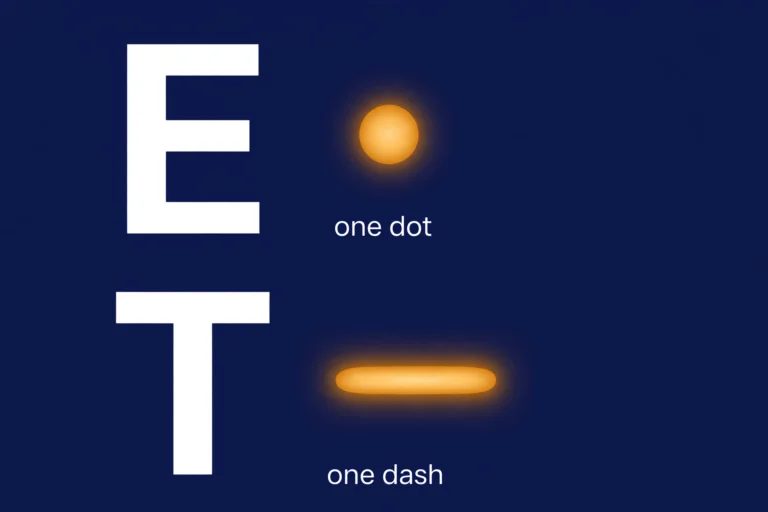
- A dash lasts 3 units (three times longer than a dot).
- The gap between symbols within the pattern is 1 unit.
- The gap between repetitions of SOS is longer — about 7 units — so the pattern stays distinct.
When sent as a distress prosign, you keep only the short 1-unit gaps between all nine symbols, with no longer pause between the S, O, and S sections. For a deeper explanation of these rules, see our full Morse code timing guide.
How to Signal SOS in Morse Code with Sound
SOS in Morse code sound is one of the most practical ways to send the signal, because you can make it with almost anything — no equipment required. The rule is simple: three short sounds, three long sounds, three short sounds.
Practical ways to produce SOS in Morse code sound:
- Tapping: knock three quick taps, three slow taps, three quick taps on a wall, table, or pipe. Pipes and metal carry sound surprisingly far.
- Whistling or shouting: three short blasts, three long blasts, three short blasts.
- Clapping or beeping: use short and long bursts with a horn, whistle, or even a car horn.
- Radio: key the transmitter with the same rhythm; SOS was originally a radiotelegraph signal.
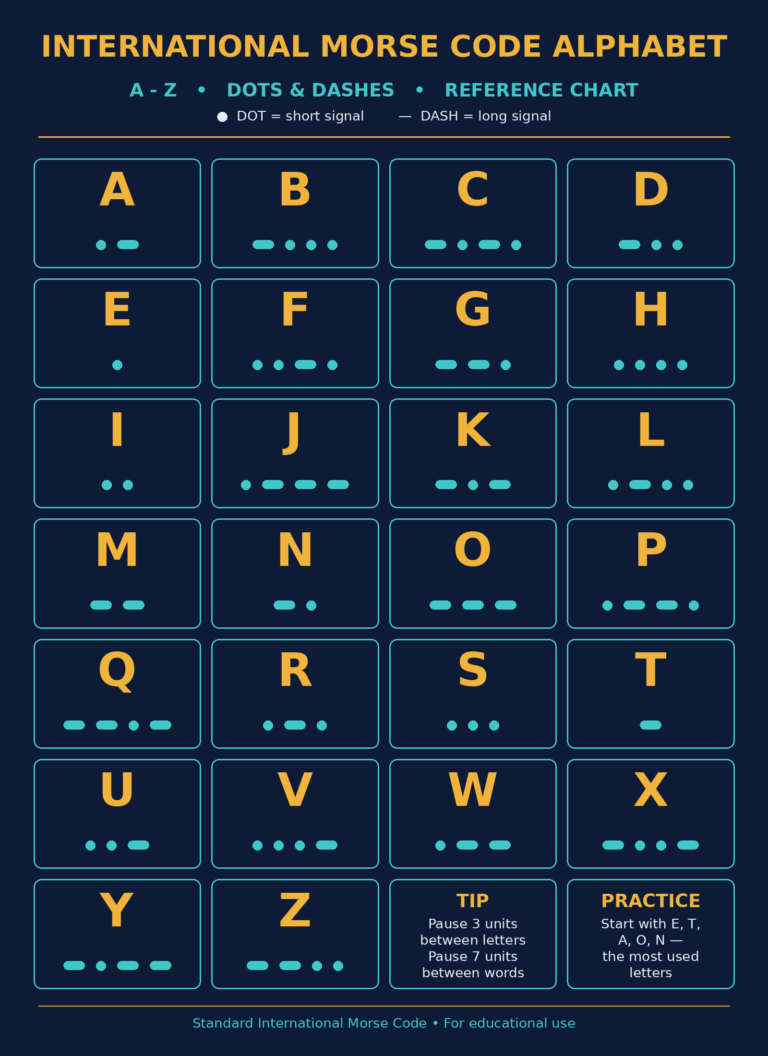
If you want to learn the rest of the code beyond the distress signal, start with our complete Morse code alphabet guide and practice the rhythm of each letter.
How to Signal SOS in Morse Code with Light
SOS in Morse code light is the classic survival signal at night: three short flashes, three long flashes, three short flashes. Short flashes are the dots; longer, held flashes are the dashes.

What you can use to flash SOS in Morse code with light:
- Flashlight or torch: cover and uncover the lens, or use the power button, to create short and long flashes.
- Phone flashlight: works the same way and most people always have one nearby.
- Signal mirror: by day, flash reflected sunlight in the same three-short, three-long, three-short rhythm.
- Vehicle headlights: toggle between high and low beams.
Keep the rhythm steady and repeat the pattern several times with a clear pause between repetitions — rescuers need to see the pattern, not just a single flash.
How to Tap SOS in Morse Code
Tapping is the oldest low-tech method of all, and it still works: SOS in Morse code tapping means three quick taps, three slow taps, three quick taps on any hard surface. In survival situations, people have tapped SOS on pipes, walls, and rocks.
Keep the taps evenly spaced and consistent. The contrast between the quick triple-tap and the slower triple-tap is what makes the signal readable — sloppy, rushed tapping can blur into meaningless noise.
The History of the SOS Signal
The SOS signal was adopted at the 1906 Berlin Radiotelegraph Convention and became the worldwide standard in 1908. Before that, ships used the Marconi company’s own distress call, CQD, which caused confusion between operators of different nationalities. SOS won because its rhythm was unmistakable and required no shared language.
The first documented use of SOS came in 1909, when the ship SS Arapahoe signaled distress. Its most famous appearance followed in 1912, when the Titanic’s radio operators sent both CQD and SOS as the ship sank — the disaster that made the signal known around the world. Read the full story in our article on Morse code and the Titanic.
When Should You Use SOS?
SOS is reserved strictly for genuine emergencies: imminent danger to life, serious injury, being lost in dangerous conditions, or a vessel in distress. It is the internationally recognized way to say “I need urgent help right now.”
Never use it as a joke or a test. In many countries, false distress signals are illegal and divert rescue resources from people who truly need them.
How to Practice SOS in Morse Code
- Learn the rhythm first: chant “di-di-di, dah-dah-dah, di-di-di” until it feels automatic.
- Practice with sound: tap the pattern on a table, starting slowly and keeping the 1:3 ratio between dots and dashes.
- Practice with light: at night, flash a torch in the three-short, three-long, three-short pattern and have someone confirm they can read it.
- Check your timing: review the unit rules in our Morse code timing guide until the gaps feel natural.
SOS in Morse Code: FAQs
How do you write SOS in Morse code?
SOS is written as . . . – – – . . . — three dots, three dashes, three dots. As a distress prosign it is sent continuously, without letter gaps.
What does SOS mean in Morse code?
It means “I am in distress — I need urgent help.” The letters were chosen for their unmistakable rhythm, not as an abbreviation.
How do you blink SOS in Morse code?
Blink three quick blinks, three slow blinks, three quick blinks. It follows the same three-short, three-long, three-short rhythm as every other SOS method.
Is SOS still used today?
Yes. Although modern systems like GMDSS and digital distress beacons have largely replaced manual Morse at sea, SOS remains an internationally recognized distress signal and is still taught in survival training worldwide.
What is the difference between SOS and Mayday?
SOS is the Morse/visual distress signal; “Mayday” (from the French “m’aidez,” meaning “help me”) is the spoken equivalent used in voice radio transmissions, repeated three times.