Phonetic Alphabet
The Phonetic Alphabet is a standardized system that assigns unique code words to each letter of the alphabet to ensure clear, unambiguous communication. It is widely used in aviation, military, emergency, and professional environments where accuracy is critical. Converting letters into distinct words prevents misunderstandings caused by similar-sounding letters and noisy connections. Mastering the phonetic alphabet improves spelling, listening, and speaking skills, making both professional and everyday communication faster, clearer, and more reliable.
What Is a Phonetic Alphabet?
This guide to the Phonetic Alphabet shows you how to use standard words for each letter so your message is always clear. It makes communication easier and stress-free, whether you’re on a call, working in aviation, customer service, or just want to avoid misunderstandings.
Full A–Z Phonetic Alphabet List
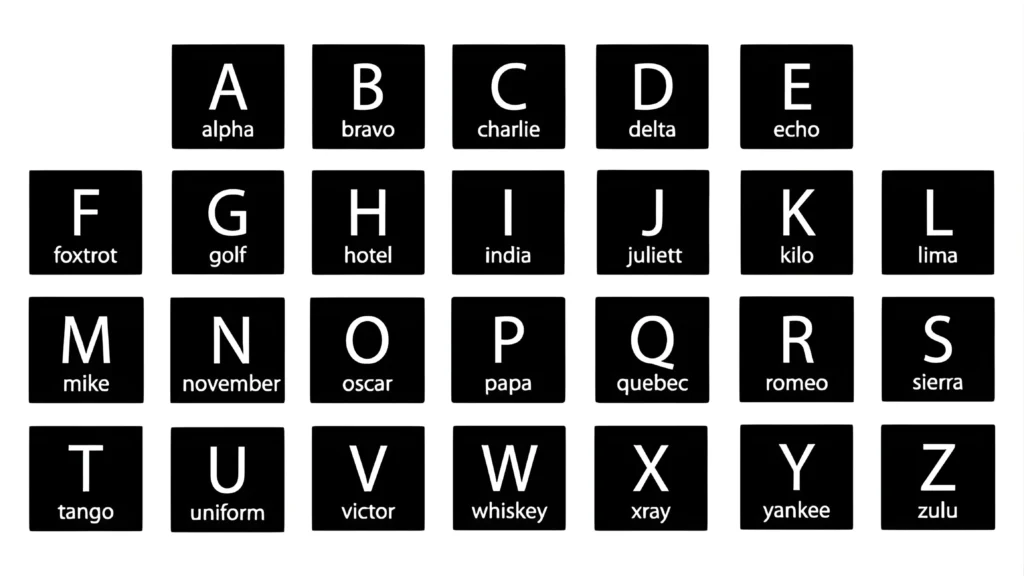
The NATO phonetic alphabet assigns a unique word to each letter from A to Z to ensure messages are clearly understood. It is the international standard used in aviation, military, and other communication systems.
Why Is the Phonetic Alphabet Used?
The phonetic alphabet is used to prevent misunderstandings when letters sound similar, especially over phone calls or radios. It helps professionals, such as pilots, military personnel, and emergency responders, communicate quickly and accurately. By using clear, standardized words, messages are less likely to be misheard or misinterpreted. It also makes spelling names, addresses, or codes easier in situations where clarity is critical. Overall, it is a simple tool that significantly improves communication efficiency.
How the Phonetic Alphabet Improves Communication
The phonetic alphabet is a great tool for clear communication, assigning unique and simple words to each letter. This clarity is especially useful when letters can sound similar or when connections aren’t obvious, resulting in smoother interactions in both professional settings and everyday conversations. It’s commonly used by pilots, emergency teams, and call-centre agents since it ensures messages stay accurate, even in noisy environments. Additionally, it assists anyone in spelling names or other significant details without the need for repetition.
Concrete examples illustrate its effectiveness in practice. For instance, the word HELLO is articulated as “Hotel, Echo, Lima, Lima, Oscar,” while LOVE becomes “Lima, Oscar, Victor, Echo,” making each letter unmistakably clear. Even for longer words like PAKISTAN, it’s straightforward to convey as “Papa, Alpha, Kilo, India, Sierra, Tango, Alpha, November.” By practicing these examples, you can effortlessly remember the phonetic alphabet and use it confidently in daily conversations.
Types of Phonetic Alphabets
There are several versions of phonetic alphabets used worldwide, each designed for a specific purpose depending on the industry or organization. These systems make communication more standardized and reduce errors in critical situations. By using clear and distinct words for each letter, misunderstandings can be minimized across different environments. Learning the types of phonetic alphabets helps users choose the right system for their needs.
NATO Phonetic Alphabet
The NATO phonetic alphabet is the most widely recognized and internationally adopted version. Each letter of the alphabet is assigned a distinct word, such as Alpha for A and Bravo for B. It is commonly used in aviation, military operations, and global communication systems. This standardized approach ensures messages are understood clearly, even in noisy or high-stress environments.
Aviation / Pilot Alphabet
Pilots and air traffic controllers rely on a standardized phonetic alphabet to communicate clearly over radios. This system is crucial during flights, especially in noisy airports or when signals are weak. Words are chosen to minimize misunderstandings, making it easier to convey instructions and coordinates. The aviation alphabet ensures safety and accuracy during all phases of flight operations.
Police / Military Phonetic Alphabet
Law enforcement and military organizations sometimes use specialized phonetic alphabets to communicate sensitive information securely. These versions may differ slightly from NATO standards to suit operational requirements. They help units convey codes, instructions, or names without confusion. Using these alphabets improves accuracy and efficiency during missions or emergencies.
Old International Radiotelephony Alphabet
Before NATO’s standardisation, the old international radiotelephony alphabet was used to spell letters in radio transmissions. Although it is largely replaced today, it remains a key morse code in history. Learning this alphabet helps understand the evolution of modern communication standards. It shows how clear communication was achieved even with earlier technology.
Why NATO Alphabet Is the Most Popular
The NATO phonetic alphabet is the most widely adopted version worldwide because it standardizes communication and reduces errors. From our experience, using words like Alpha for A or Bravo for B made spelling names or codes faster and easier to understand. Its use in aviation, military, and emergency services demonstrates how it ensures accuracy even in noisy or stressful environments. This widespread adoption makes NATO the preferred choice for both professional and casual communication.
How to Spell Your Name Using the Phonetic Alphabet
At first, I didn’t know how to use the phonetic alphabet, but then I tried it with my own name. My name is Safwana, and I spell it as Sierra, Alpha, Foxtrot, Whiskey, Alpha, November, Alpha. This method made it easy for others to understand and pronounce my name correctly, even over the phone or in noisy environments. You can try it with your own name and see how clearly it can be communicated. Practicing this regularly helps you gain confidence in both professional and casual situations.
FAQs
Here are some common questions about the phonetic alphabet and how it is used in daily and professional communication. Understanding the answers helps beginners and professionals use it effectively. These FAQs cover usage, differences, and practical scenarios where the phonetic alphabet is important.