Morse Code in Aviation: How Pilots Use It Today
Morse code in aviation is easy to miss, because you never see it. There is no key in the cockpit and no operator tapping out messages — just a quiet, slow stream of beeps on the navigation radio that tells the pilot one simple thing: you are tuned to the right station. In an age of GPS, that humble beep still earns its place.
Every ground-based navigation aid — VOR, NDB and ILS stations — broadcasts its own short identifier in Morse code, over and over again. Pilots listen, compare it with the dots and dashes printed on their charts, and only then trust the station. Here is how each system uses it, and why it refuses to die.
What Is an Aviation Morse Code Identifier?
An aviation Morse code identifier is a short code, usually three letters from the station’s name, transmitted continuously on the station’s own frequency. The same letters appear on aeronautical charts with their dot-and-dash pattern, so pilots can check what they hear against what they see. For example, the VOR-DME at Cayo Largo del Sur in Cuba identifies as UCL — ..- -.-. .-.. — repeated on its frequency.
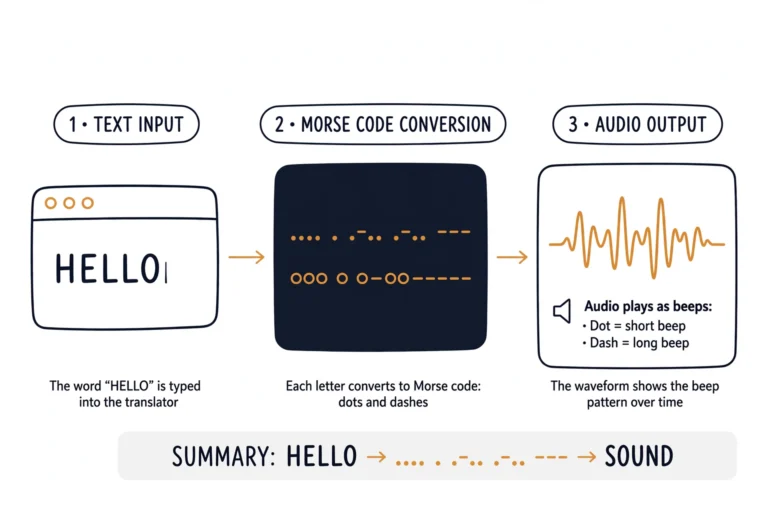
Aviation Morse is sent very slowly, at about 5 words per minute — far slower than amateur radio speeds, and deliberately so. The identifier is a label to be recognised, not a message to copy, and slow beeps are easy to recognise in a noisy cockpit. The rhythm follows the standard rules in our morse code timing guide.
VOR Morse Code Identifiers: How Pilots Check a VOR
A VOR (VHF omnidirectional range) is the workhorse of traditional air navigation. The pilot tunes its frequency, turns up the identifier audio, and listens. If the chart says the station is FLW, the Fellows VORTAC, the pilot should hear ..-. .-.. .– and compare it, beep by beep, with the pattern printed beside the station symbol. A match confirms the right station is tuned in, and it is in service.
The second point matters most. During maintenance, crews often switch off the identifier while leaving the navigation signal on the air, so a pilot who skips the check could follow a steady needle from an unreliable station. The rule is simple: no valid identifier, no trust. Many VORs are paired with a DME station, giving direction and distance from one tuning — but the Morse check still comes first.
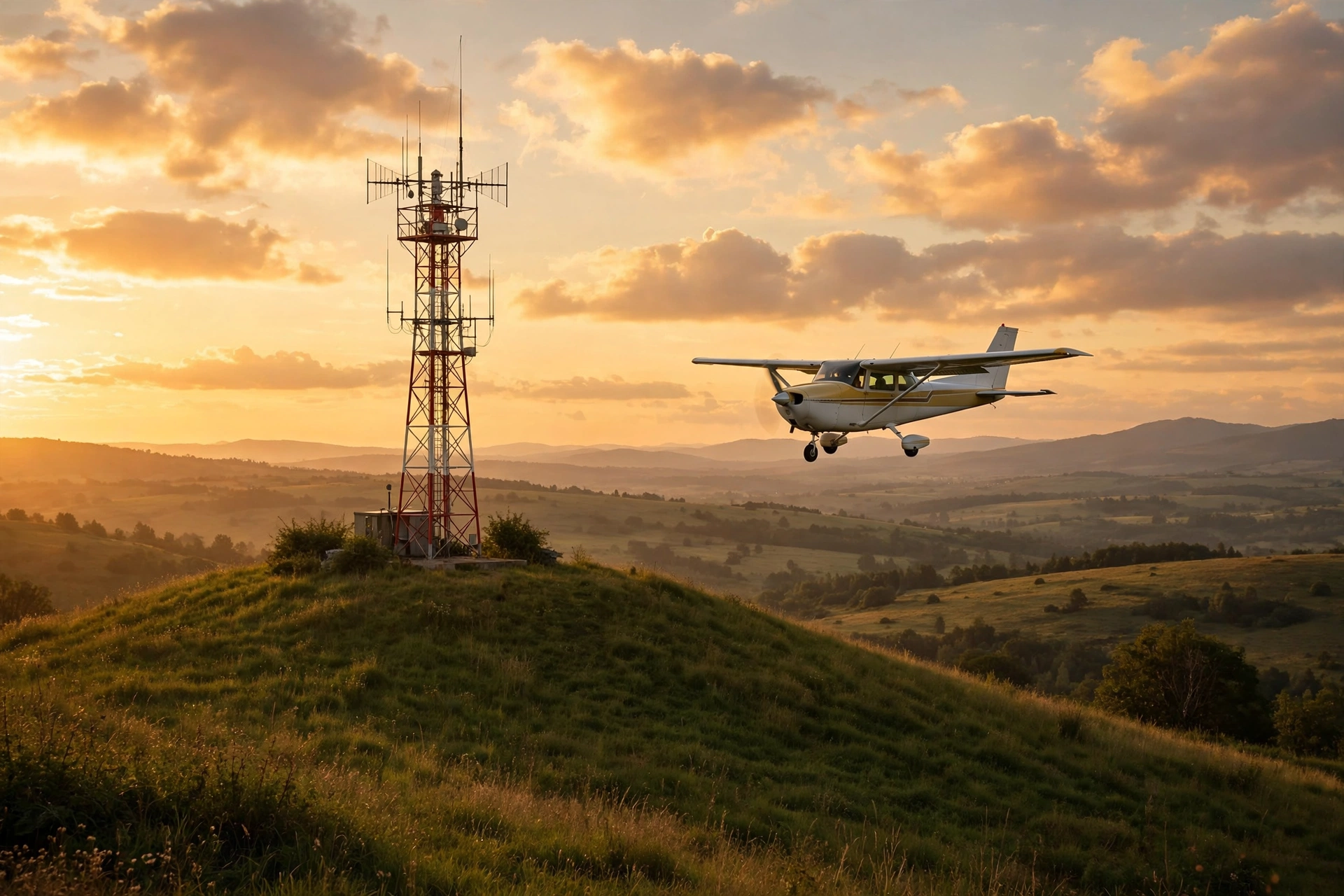
NDB Beacons and Their Morse Identifiers
An NDB (non-directional beacon) is an older, simpler station. It broadcasts a Morse identifier on a low or medium frequency, near the AM broadcast band, and the aircraft’s ADF needle simply points toward it. NDBs give no distance information, and their signals can waver with weather, so pilots on an NDB approach must monitor the identifier throughout — not just once at the start.
NDB approaches are rare today, but dozens remain in remote areas as the only approach option.
ILS Identifiers: Localizer and Marker Beacons
An ILS (instrument landing system) guides an aircraft down to the runway, and its Morse identifiers work in two layers. The localizer, which gives left-right guidance, transmits an identifier that always begins with the letter I (..), followed by two or three more letters. Because two runway ends can share one frequency with different identifiers, pilots monitor the localizer identifier continuously through the approach.
| Marker beacon | Morse pattern | Cockpit light |
|---|---|---|
| Outer marker | A steady run of dashes | Blue |
| Middle marker | Alternating dots and dashes | Amber |
| Inner marker | A rapid run of dots | White |
So an approach counts down: dashes and blue, then dot-dash and amber, then dots and white.
What Does TEST Mean on a Navigation Aid?
Sometimes a station transmits TEST in Morse code instead of its identifier: – . … -. That is a deliberate warning — the facility is under maintenance or otherwise unreliable, and its signal must not be used. Some countries simply remove the identifier during maintenance; in Canada, removal alone signals the aid is not to be used. Either way: no correct identifier means an unusable station, however strong the signal looks.
Airport Code Beacons: Morse Code in Light
Morse code in aviation is also seen, not just heard. Under the FAA’s Aeronautical Information Manual, an airport code beacon flashes the airport’s three or four character identifier in Morse, six to eight times per minute. Green flashes mark land airports, yellow mark water airports, and the beacon is visible from all directions.
Why Do Pilots Still Listen to Morse Code?
Why does a 19th-century code survive in GPS cockpits? First, verification: the identifier is still the only way to be certain you tuned the correct station and that it is in service — one wrong digit is an easy mistake, and the beeps catch it. Second, simplicity: it needs almost no equipment and almost no skill to recognise at 5 words per minute. Third, backup: GPS can be disrupted, and aviation authorities keep a minimum network of VORs precisely as a GPS backup. As long as ground stations exist, their identifiers are the cheapest proof they are alive.

Do Pilots Need to Know Morse Code?
In the United States, pilots do not have to know Morse code to use these aids: the dot-and-dash pattern is printed beside every station symbol on the chart, and some modern receivers decode the identifier into letters automatically. But knowing the letters makes the check faster — and at about 5 words per minute, aviation identifiers are the gentlest introduction to copying Morse. Start with our morse code alphabet guide and daily practice plan.
Is Morse Code Still Used in Aviation Today?
Yes — reduced, but not gone. GPS is now primary for most flights. Yet identifier checks are still taught, still expected on instrument checkrides, and still performed on every ground-station approach. Morse code’s aviation job has narrowed from carrying messages to one small job done perfectly: proving, in a few slow beeps, that the station you trust is really there.
Frequently Asked Questions
What does a VOR identifier sound like?
A slow, repeating pattern of short beeps (dots) and longer beeps (dashes) — FLW sounds as ..-. .-.. .– at roughly 5 words per minute. Pilots usually listen for one or two repetitions, then turn the audio down.
Can I listen to aviation Morse code myself?
Yes, with an airband receiver or an online software-defined radio (SDR) tuned to a nearby VOR or NDB frequency. Listen only — never transmit on aviation frequencies. It is a fun way to practise recognising letters at real slow speed.
How is a Morse identifier different from the phonetic alphabet?
A Morse identifier is a station’s automatic label in dots and dashes, for verifying a navigation aid. The phonetic alphabet is spoken words — Alfa, Bravo, Charlie — that pilots say aloud so letters are not confused on voice radio. One identifies machines; the other helps humans speak clearly.
Try It Yourself
Next time you read about a VOR or NDB station, decode its identifier letters with our free morse code translator. Our learn morse code guide, ham radio morse code guide and morse code Q codes list cover the wider world of radio Morse.