Morse Code Phrases: Common Greetings & Meanings
Morse code phrases are the fastest way to go from knowing the alphabet to actually saying something. Once you can send single letters, whole greetings like “hello” and “good morning” are just a few short signals strung together — and this guide gives you the most useful ones, with exact dot-dash patterns you can practise today. Every pattern below was checked letter by letter against the international Morse code alphabet, so what you copy here is what a listener will actually hear.

What Are Morse Code Phrases?
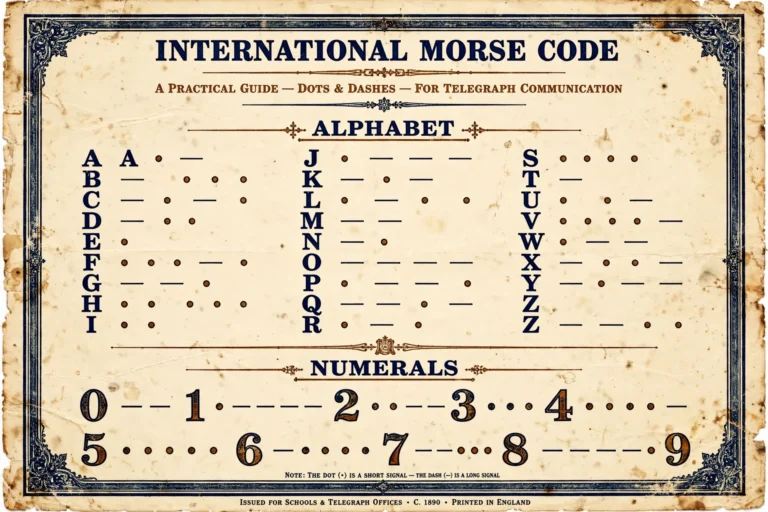
A Morse code phrase is simply a complete word or short sentence written in dots and dashes. Letters inside a word are separated by a short gap (one dot long), words are separated by a longer gap (seven dots long, written here as /), and each letter keeps its standard pattern from the Morse code alphabet. That spacing is what turns a string of beeps into readable words — without it, “hello” and a random run of dots sound exactly the same.
Phrases are also the most practical thing to learn first: learners who practise whole phrases build rhythm and confidence much faster than those who only drill single letters. If you are just starting out, our beginner’s guide to learning Morse code covers the alphabet and timing rules step by step.
Greetings in Morse Code
Greetings are the phrases you will use most, whether you are opening a radio contact, practising with a friend, or sending a flashlight message on a camping trip. Learn these six first and you can open almost any Morse conversation.
| Phrase | Morse code | When to use it |
|---|---|---|
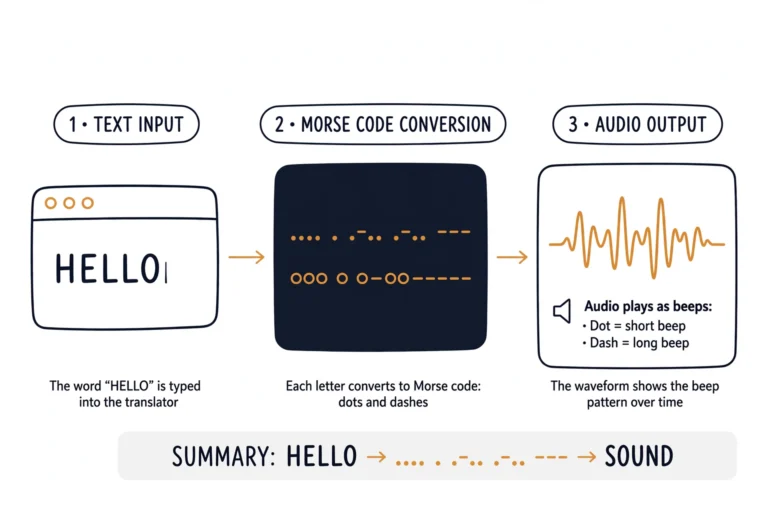
| Hello | .... . .-.. .-.. --- | The universal opener — start any message with it. |
| Good morning | --. --- --- -.. / -- --- .-. -. .. -. --. | A friendly start to the day, on air or in person. |
| Good night | --. --- --- -.. / -. .. --. .... - | Signing off for the evening. |
| How are you | .... --- .-- / .- .-. . / -.-- --- ..- | The natural follow-up after “hello”. |
| Welcome | .-- . .-.. -.-. --- -- . | Greeting someone joining a conversation or group. |
| Goodbye | --. --- --- -.. -... -.-- . | A warm, complete sign-off. |
Tip: say each letter’s pattern out loud as you send it until the whole word flows as one rhythm instead of separate letters. That shift is the moment Morse code starts to feel like a language.
Polite Words and Everyday Phrases in Morse Code
Polite phrases are short, high-value and easy to memorise, which makes them perfect practice material. They also teach you the trickiest spacing lesson in Morse code: the gap between words matters as much as the dots and dashes themselves.
| Phrase | Morse code | Note |
|---|---|---|
| Please | .--. .-.. . .- ... . | Five letters — a great first multi-letter word. |
| Thank you | - .... .- -. -.- / -.-- --- ..- | Watch the word gap between “thank” and “you”. |
| Sorry | ... --- .-. .-. -.-- | Short and instantly recognisable. |
| Yes | -.-- . ... | Three letters, one smooth rhythm. |
| No | -. --- | The shortest useful answer in Morse code. |
| Good luck | --. --- --- -.. / .-.. ..- -.-. -.- | Perfect before an exam, interview or contest. |
If you mix up “yes” and “no” while practising, slow down rather than speeding up. Morse code timing rules explain why: a dash is three dots long, and rushing turns dashes into dots, which changes the letter completely.
Celebration Phrases in Morse Code
Birthdays and good news are where Morse code gets fun. These two longer phrases are favourites for cards and surprise messages, and they make excellent copy practice because they force you to hold your rhythm over many letters.
| Phrase | Morse code |
|---|---|
| Happy birthday | .... .- .--. .--. -.-- / -... .. .-. - .... -.. .- -.-- |
| Congratulations | -.-. --- -. --. .-. .- - ..- .-.. .- - .. --- -. ... |
For a message to someone special, keep it short: one heartfelt phrase, sent cleanly, lands better than a long paragraph full of errors. Our guide to “I love you” in Morse code covers the most personal phrase of all, letter by letter.
How to Send a Morse Code Phrase
Follow these steps and your first message will be readable on the first try:
- Write it out first. Convert each letter to dots and dashes on paper before you touch the key. Guessing mid-send is how errors happen.
- Keep the gaps honest. One dot between parts of a letter, three dots between letters, seven dots between words. This is the single most common beginner mistake.
- Send slowly and evenly. A slow, steady phrase beats a fast, garbled one every time. Speed comes later — our daily Morse code practice plan shows how to build it without burnout.
- Check it with the translator. Type your phrase into the free Morse code translator on our homepage and listen to how it should sound, then compare it with your own sending.
- Send it twice. Radio operators repeat important phrases. If your listener misses a letter the first time, the repeat saves the message.

Radio and Emergency Phrases: Know Them, Don’t Confuse Them
A few famous Morse phrases belong to special contexts, and they deserve a careful mention rather than a full lesson here. The distress signal SOS (... --- ...) is a prosign sent as one continuous pattern, not three letters — send it only in a real emergency. On the radio, operators open contacts with CQ and close with 73 (“best regards”); both are explained in our guides to ham radio Morse code and Morse code prosigns. Keep everyday phrases and radio shorthand in separate mental boxes and you will never mix them up on air.
Common Mistakes When Writing Morse Code Phrases
Three errors spoil more phrases than any others. First, dropping the word gap, so “thank you” runs together into gibberish. Second, copying a pattern from an unverified website — many phrase lists online contain wrong letters, including wrong versions of “hello” itself, so always cross-check against the alphabet chart. Third, practising only by sight: read every phrase aloud in dits and dahs, not just with your eyes.
Frequently Asked Questions About Morse Code Phrases
What is the most common Morse code phrase?
SOS is the most recognised Morse code pattern in the world, followed by greetings like “hello” and “good morning”. For learners, “hello” is the best first phrase because it is short and uses only common letters.
How do you write “hello” in Morse code?
Hello in Morse code is .... . .-.. .-.. --- — H is four dots, E is one dot, L is dot-dash-dot-dot (twice), and O is three dashes. Keep a short gap between letters so the listener hears five letters, not one long run.
How do you say “thank you” in Morse code?
Thank you in Morse code is - .... .- -. -.- / -.-- --- ..-. The slash marks the longer word gap between “thank” and “you” — without it, the two words blur into one.
Can I send Morse code phrases with a flashlight?
Yes. Short flashes are dots and long flashes are dashes, with the same gaps as sound or key sending. Flashlight phrases work best at night, at short range, and with the same slow, even rhythm you would use on a telegraph key.
What is a good first phrase to learn in Morse code?
Start with “hello”, then “thank you”, then “good morning”. Together they teach every spacing rule you need for longer phrases.
Conclusion
Morse code phrases turn a code you study into a language you speak. Start with “hello”, add “thank you” and “good morning”, and practise one new phrase a day with honest spacing and a steady rhythm. Try your first phrase in the free Morse code translator now, then send it to someone and watch their face when they decode it.